
Pelvic floor and premature ejaculation
Notice clenching, and let it go on the out-breath. That is the skill this program trains.

What is the pelvic floor?
The pelvic floor is the group of muscles between your pubic bone and your tailbone.
Many people know it from Kegels, the exercises that strengthen these muscles. Strength is one side of it. Control is the other side: noticing when the muscles tighten, and letting them go. This article is about that second side, and about what the studies on strengthening say.
What does it do in ejaculation?
The pelvic floor is part of the last step of ejaculation: rhythmic contractions that push semen out.1 See the two steps of ejaculation.
Why do people clench when they hold back?
When people fight the urge to finish, they often clench these muscles, and the buttocks, without noticing.
Pelvic pain and tension are linked to early ejaculation, and relaxation training has helped men with pelvic pain in a study without a comparison group.2,3
Unnoticed clenching during sex hasn't been studied directly, but constant tension may make sessions harder and leave you sore afterward. From training practice
How do you notice and release tension?
Lying on your back with your legs straight and relaxed makes this easier to notice. That is why sessions are done in that position until Phase 7. From training practice
Let the muscles relax. Don't push them outward: pushing adds pressure in the belly. Slow belly breathing relaxes the area gently on its own. From training practice
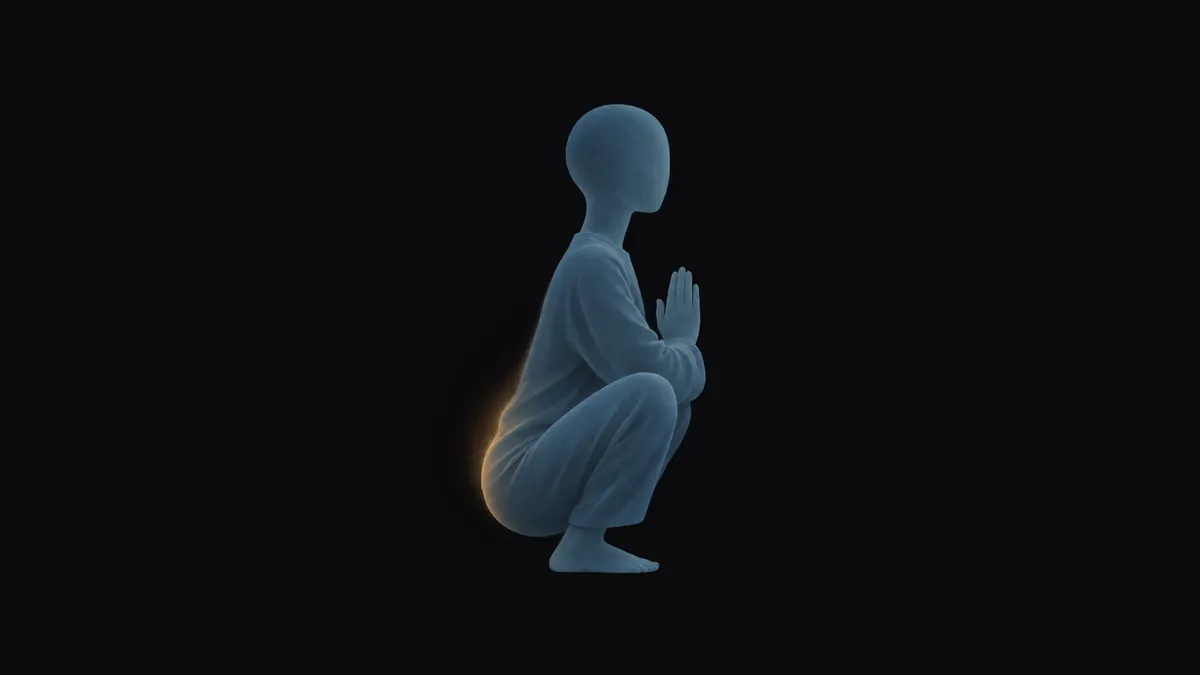
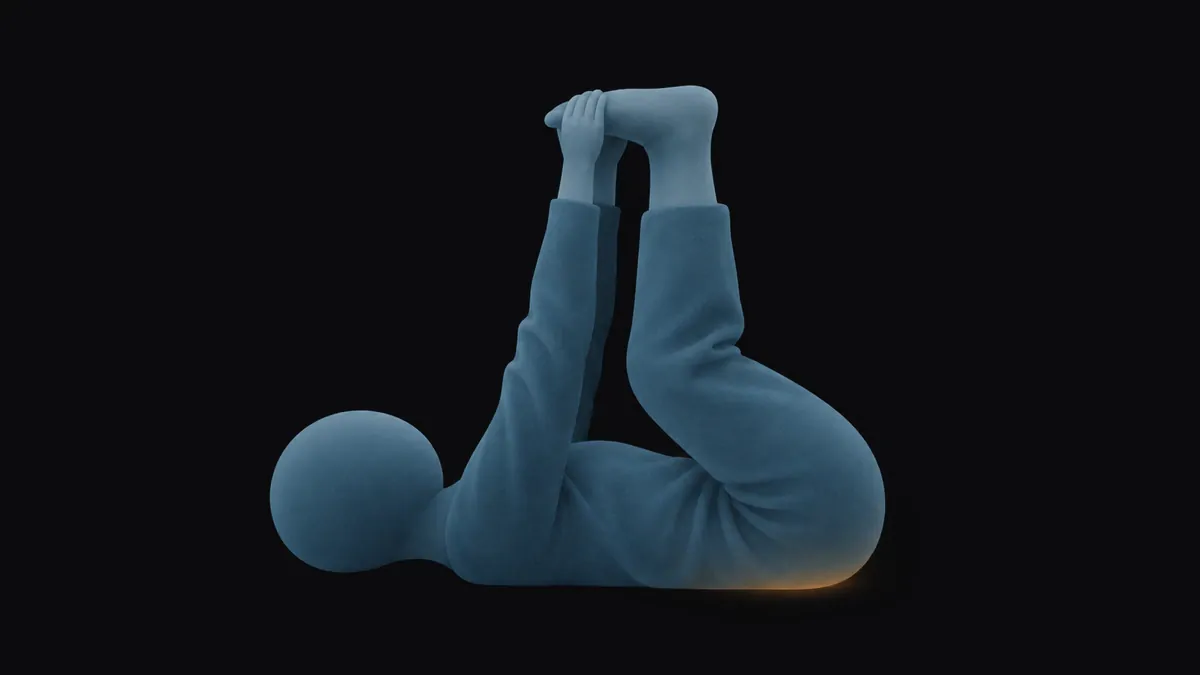
Sometimes the muscles keep contracting after you stop, and now and then this leads to release. If it does, it counts like passing the point of no return: log it, finish the week's sessions, and repeat the Phase. To make it less likely, stop a little sooner, breathe out long and slow with a relaxed jaw, and let the area go. Many people find it eases with practice. If the contractions hurt, or keep happening, see a doctor. From training practice
Do strengthening exercises help?
Structured pelvic floor rehabilitation, usually with a physiotherapist, has shown promising results for lifelong premature ejaculation in a small study without a control group.4 Many kept their gains two to three years later.5
In one small trial, adding breathing practice to pelvic floor and behavioral training helped more.6 A 2026 review of trials is the latest look at the evidence, which is still building.7 That is encouraging, not conclusive. Those programs train strength and control, not only relaxing.
In another small trial, men with lifelong premature ejaculation who followed a set solo-stimulation routine improved more than men doing pelvic floor exercises, though both groups improved. The men were not assigned at random, and the routine was not the start-stop method used here.8
Strengthening is not part of this program. If you want to strengthen, do it with a pelvic health physiotherapist rather than on your own. The program trains the control side: noticing and letting go. See how the method works.
When should you see a physiotherapist or doctor?
If you are interested in strengthening, a pelvic health physiotherapist can tell you whether your muscles need strengthening, relaxing, or both.
If you have ongoing pelvic, genital or testicle pain, see a doctor or a pelvic floor physiotherapist before trying the stretch above. If contractions after a stop hurt, or keep happening, see a doctor. More on this in the FAQ.
Sources
Claims marked From training practice come from coaching experience, not from studies.
- Alwaal A, Breyer BN, Lue TF. (2015). Normal male sexual function: emphasis on orgasm and ejaculation. Fertility and Sterility 104(5):1051-1060. Expert summary.
- Lee JH, Lee SW. (2015). Relationship between premature ejaculation and chronic prostatitis/chronic pelvic pain syndrome. Journal of Sexual Medicine 12(3):697-704. Large one-time survey.
- Anderson RU, Wise D, Sawyer T, et al. (2006). Sexual dysfunction in men with chronic prostatitis/chronic pelvic pain syndrome: improvement after trigger point release and paradoxical relaxation training. Journal of Urology 176(4 Pt 1):1534-1538. Study without a comparison group.
- Pastore AL, Palleschi G, Fuschi A, et al. (2014). Pelvic floor muscle rehabilitation for patients with lifelong premature ejaculation: a novel therapeutic approach. Therapeutic Advances in Urology 6(3):83-88. Small study, no comparison group.
- Pastore AL, Palleschi G, Fuschi A, et al. (2018). Pelvic muscle floor rehabilitation as a therapeutic option in lifelong premature ejaculation: long-term outcomes. Asian Journal of Andrology 20(6):572-575. Look back at a group of patients.
- Erkut U, Karagozoglu Coskunsu D, Erkut K, et al. (2025). The effects of diaphragmatic breathing exercises on individuals with premature ejaculation: a randomized controlled trial. Journal of Sexual Medicine 22(8):1422-1429. Randomized trial, 59 men.
- de Oliveira FA, Lima LB, da Costa MO, et al. (2026). Efficacy of pelvic floor muscle training in the management of premature ejaculation: a systematic review and meta-analysis of randomized controlled trials. Journal of Sexual Medicine 23(6):qdag131. Pooled analysis of randomized trials.
- Jiang M, Yan G, Deng H, et al. (2020). The efficacy of regular penis-root masturbation, versus Kegel exercise in the treatment of primary premature ejaculation: a quasi-randomised controlled trial. Andrologia 52(1):e13473. Small quasi-randomized trial.